

DESCON 9.0: Navigating Trust and Power in the Algorithmic Age
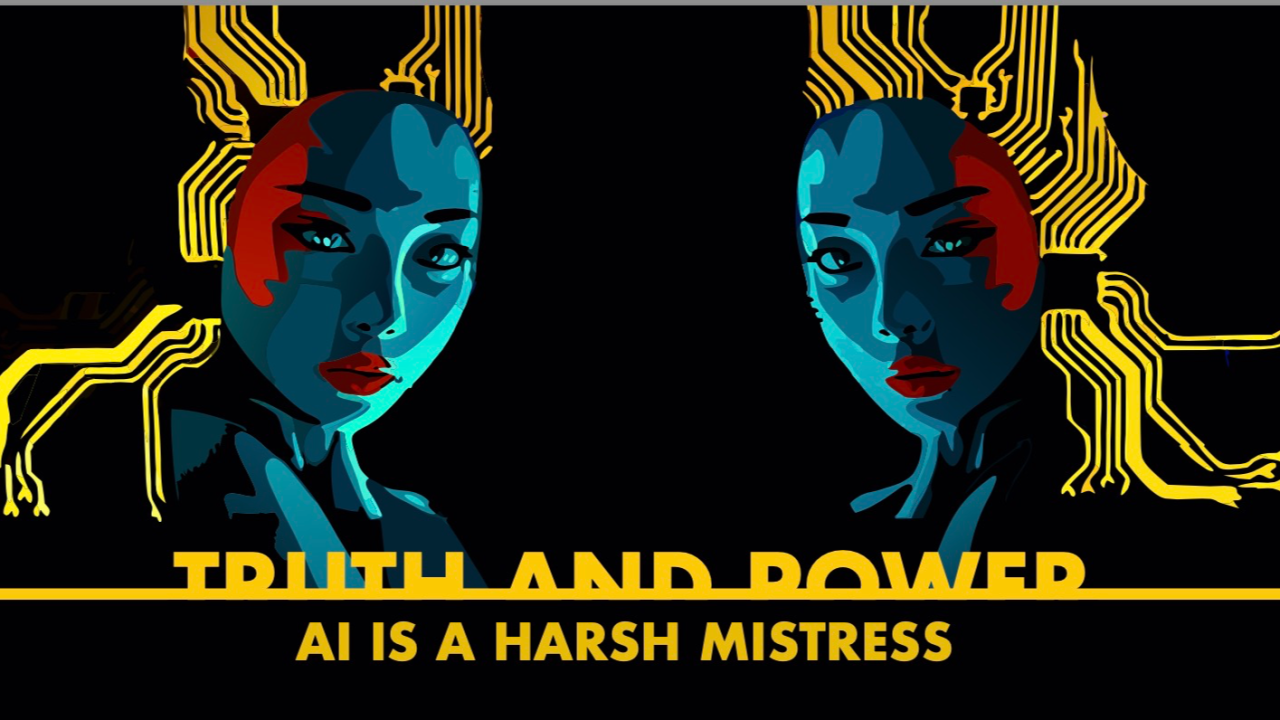
ISOC Switzerland Chapter - Sunday, December 7, 2025From 21–23 November 2025, the Miljenko Dereta Center in Belgrade hosted DESCON 9.0. Organized by the Internet Society – Serbia Chapter, this year’s conference carried the theme “Trust and Power: AI is a Harsh Mistress.”Participants from diverse fields—developers, researchers, activists, artists, and technologists—gathered to explore how today’s technological infrastructure is reshaping society.
The event once again distinguished itself through its interdisciplinary reach across ecology, open hardware, digital rights, citizen science, and artificial intelligence.
Opening the conference, Desiree Miloshevic, DESCON’s founder, reminded the community that DESCON is where hands-on experimentation meets policy. What began as a small IoT and security meetup has grown into a platform for sustainable connectivity, civic innovation, and climate technology. She called on participants to question assumptions, collaborate across sectors, and build technology that protects dignity and the public good.
The keynote by Marianthe Stavridou, Vice-Chair of the Internet Society – Switzerland Chapter, traced a line from Plato’s Cave to the algorithmic systems shaping our perception today. She warned of a drift toward “technofeudalism”, where data becomes the ultimate commodity in the hands of a few. The message is clear: AI is not the fate of humanity but its mirror—ethics, transparency, and openness must guide its developments.
The Finnish researcher Jari Arkko spoke remotely, examining AI’s massive and growing environmental footprint, from energy-hungry data centers to costly hardware. Yet he emphasized that AI can still be a net-positive force when used judiciously to optimize energy systems in transport, buildings, and industry. Sometimes, he noted, the best solution is not AI.
Later, Urs Gehrig demonstrated how AI is transforming reliability engineering across sectors, from automated train inspections to integrated data systems. His takeaway: AI succeeds when organizations collaborate, understand their processes, and move beyond proofs-of-concept toward practical deployment.
Andrijana Gavrilović of the Diplo Foundation unpacked why global AI governance remains slow and fragmented. Drawing on the work of the UN High-Level Advisory Body on AI, she highlighted recommendations for a scientific panel, regulatory interoperability, global data frameworks, and a smaller but focused UN AI office. With forums like the Global Digital Compact taking shape, she stressed that AI is global—and its governance must urgently catch up.
From the UNDP, Slobodan Marković reflected on Serbia’s early AI leadership through its 2019 strategy and institutions like the National AI Institute and the national data center. But momentum is fading: political backing has weakened, pilots have stalled, and the upcoming AI strategy lacks a funded action plan. Serbia’s future AI progress, he argued, depends entirely on renewed political will and sustained investment.
The Share Foundation team—Andrijana Ristić, Tijana Stevanović, and Filip Milošević—offered a clear-eyed analysis into global spyware operations and Serbia’s own NoviSpy case. They warned that spyware is now an expanding industry threatening not just individuals but democratic systems. Encryption is meaningless if the device is compromised, they stressed, and “I have nothing to hide” is not a defense but a dangerous surrender of rights.
The workshop “AI Is a Harsh Mistress” tackled the promises and risks of autonomous decision-making. One group highlighted the strain data centers place on power grids, the erosion of coding competence due to AI assistance, and conflicts between commercial and human-centered AI models. Another group emphasized existing EU protections—such as GDPR Article 22—while noting that enforcement lags behind technological reality. Both agreed on the need for human oversight, stronger legal safeguards, and attention to how AI disproportionately affects vulnerable communities.
The DESCON 9.0 Hackathon launched with high energy, challenging teams to upgrade KLIMERKO, the citizen-science air-quality network born at DESCON 7.0. Teams explored new sensors, solar-powered prototypes, LoRaWAN connectivity, indoor TFT displays, and predictive models combining Klimerko data with weather forecasts.
Across three days, DESCON 9.0 showed how bottom-up initiatives can bring together people from different disciplines to confront the defining challenges of the algorithmic age. The event underscored a shared belief: technology is not an inevitable force but a human choice. The systems we design must elevate dignity, strengthen trust, and distribute power fairly.
The labyrinth of the digital future may be complex—but navigating it is a collective effort.
Many thanks to Desiree Miloshevic Evans, Ivan Jelić, Milena Milivojev, Jan Krasni, Božidar Tanasković, Vanja Stanić, the team and the Internet Society – Serbia Chapter for an inspiring and unforgettable event.
The post DESCON 9.0: Navigating Trust and Power in the Algorithmic Age appeared first on ISOC Switzerland Chapter.