

NCSR Demokritos Participates in the AmphiPoly research programme for the study and restoration of the Kasta Tumulus monument in Amphipolis
National Centre For Scientific Research Demokritos - Tuesday, February 10, 2026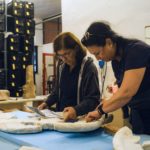


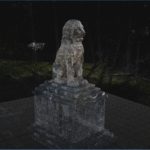



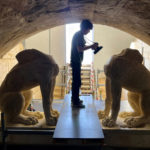

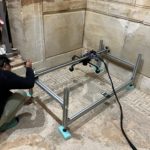
Photos: Hellenic Ministry of Culture
On 19 January 2026, the Minister of Culture, Lina Mendoni, signed a Programming Agreement between the Hellenic Ministry of Culture, the National Hellenic Research Foundation, and the National Centre for Scientific Research “Demokritos” (NCSR Demokritos), with a total budget of €660,000 funded by the Ministry of Culture from its own resources.
Through this agreement, the Ministry of Culture entrusts the two research centres with the implementation of the research project AmphiPoly, which focuses on the scientific study and documented enhancement of the polychromy of the tomb monument of the Kasta Tumulus in Amphipolis.
The objective of the AmphiPoly research project is the scientifically documented reconstruction of the monument’s original decorative appearance, including its polychromy and iconography, across all its chronological phases. Drawing on archaeometric measurements, digital tools, and historical-archaeological research, the project will produce a three-dimensional digital representation and support the monument’s aesthetic restoration.
The project aims to refine the evaluation of the monument’s significance, use, and dating, while documenting its original decoration, which has become difficult to discern in many areas due to wear and later alterations. At the same time, AmphiPoly supports the development of innovative, experiential, and interactive museum approaches, incorporating digital technologies that enable virtual exploration of the monument, interactive engagement with its architectural and decorative elements, and visualisation of the archaeometric data underpinning the restoration process.
The results of archaeometric analyses—carried out by specialised laboratories of NCSR Demokritos in collaboration with teams from internationally recognised research centres—will be combined with high-resolution digital material from three-dimensional scanning and data visualisation applications. The project foresees the creation of physical replicas of selected decorative elements (the façade with the Sphinxes, the mosaic, and the pedestal with the Lion), as well as digital models and virtual reality (VR) applications for museum use. Visual artists will contribute to the digital completion and restoration process, using artificial intelligence tools in conjunction with archaeometric data relating to worn, lost, or poorly preserved iconographic elements of the mosaic and painted marble friezes. Comparative spectroscopic analyses and ultra-high-resolution imaging of related Macedonian tomb paintings—such as the Persephone abduction fresco from Tomb I at Aigai—together with laboratory dating results from mortar and osteological samples from within the tomb, will further inform the study.
Minister of Culture Lina Mendoni noted that the Macedonian Tomb at the Kasta Tumulus in Amphipolis, an emblematic monument of exceptional historical and archaeological importance, requires a unified and holistic approach in order to ensure its comprehensive protection. She emphasised that, alongside the restoration and enhancement works implemented by the Ministry’s services, the AmphiPoly research programme operates in a complementary manner, drawing on cutting-edge scientific knowledge, technology, and archaeometry to study and document the monument’s original polychromy, aesthetics, and symbolic depth. The programme will result in a new, fully documented body of data, while also offering modern tools for understanding and engaging with the monument at an international level.
The President of the National Hellenic Research Foundation, Dimitris Sarigiannis, highlighted the importance of interdisciplinary methodologies, advanced non-destructive analytical techniques, and high-precision digital applications in reconstructing the monument’s original chromatic richness and shedding new light on Macedonian funerary architecture. He underlined the value of collaboration between the State, research institutions, and society, to transform new scientific knowledge into open resources for both the scientific community and the wider public.
The Director and Chairman of the Board of NCSR Demokritos, Vangelis Karkaletsis, stated that Demokritos’ participation in the AmphiPoly project continues its long-standing contribution to archaeometry and non-invasive analytical techniques applied to cultural heritage. He noted that Demokritos’ research teams, with expertise ranging from innovations in X-ray fluorescence (XRF) for the study of ancient polychromy to reliable dating of organic materials and mortars and the determination of marble provenance, will contribute to a deeper understanding of the role and significance of the Kasta Tumulus monument in antiquity, supporting its documented and respectful enhancement.